Wolverine Blend Peptide Stack
BPC-157 10mg + TB-500 10mg — Lyophilized Vial
Description
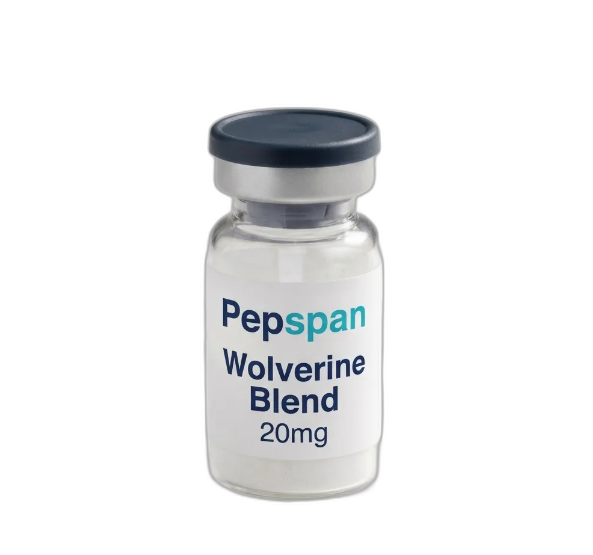
Wolverine Blend at a glance. Wolverine Blend (BPC-157 10 mg + TB-500 10 mg), a lyophilised powder for laboratory research use, costs €114.90 at Pepspan. Lot PEP-WOLV-2608-01 is made from independently tested components: BPC-157 lot PEP-BPC157-2607-01 (99.7% HPLC, report) and TB-500 lot PEP-TB500-2608-01 (98.5% HPLC, report). Ships from Europe with EU delivery in 2–5 days; free shipping on orders over €50. Pay by card, PayPal or crypto (−15%).
The Wolverine Blend is a precision-formulated research peptide combination that brings together two of the most extensively studied recovery peptides in a single lyophilized vial: BPC-157 at 10mg and TB-500 at 10mg, totaling 20mg of active peptide content. This blend is designed for researchers investigating the synergistic effects of combining a gastric pentadecapeptide with a thymosin beta-4 fragment in tissue repair and regeneration models.
The scientific rationale for combining these two peptides lies in their complementary mechanisms of action. BPC-157 operates primarily through modulation of the nitric oxide system, growth factor receptor expression (particularly VEGF and FGF receptors), and interaction with the dopaminergic system. TB-500, in contrast, functions through actin sequestration, promoting cell migration and reducing inflammation via distinct cytokine pathways. When used together in research protocols, these peptides target tissue repair from fundamentally different molecular angles, creating conditions for researchers to study multi-pathway recovery dynamics that neither peptide achieves alone.
Preclinical studies examining combined BPC-157 and TB-500 administration have reported enhanced outcomes compared to either peptide administered individually. In tendon injury models, the combination treatment showed improved collagen fiber organization and accelerated functional recovery timelines. Researchers studying musculoskeletal injuries have noted that BPC-157's angiogenic properties complement TB-500's cell migration-promoting effects, creating a more complete tissue repair environment in experimental settings. The anti-inflammatory effects appear to be additive, with combined treatment protocols showing greater reductions in inflammatory markers than single-peptide protocols.
From a practical research standpoint, the Wolverine Blend offers significant advantages. Co-lyophilization ensures precise stoichiometric ratios between the two peptides, eliminating the variability that can occur when reconstituting and mixing separate vials. The higher dosage of 10mg per peptide (compared to the standard 5mg individual vials) provides researchers with sufficient material for extended experimental timelines without the need for frequent reconstitution, reducing contamination risk and improving protocol consistency.
The value proposition is straightforward: purchasing BPC-157 and TB-500 individually at equivalent quantities would cost substantially more than the Wolverine Blend. For laboratories conducting synergistic recovery research, this blend represents the most cost-effective and methodologically sound approach to dual-peptide experimentation. Each vial is manufactured under cGMP conditions and verified by third-party HPLC analysis to exceed 98% purity for both peptide components.
EU Shipping: Ships from the EU warehouse. Free shipping on orders over €50. No customs delays — intra-EU shipment. Tracked via Spring GDS / DHL EU Connect. Janoshik COA available per batch on request.
Reconstitution & Storage
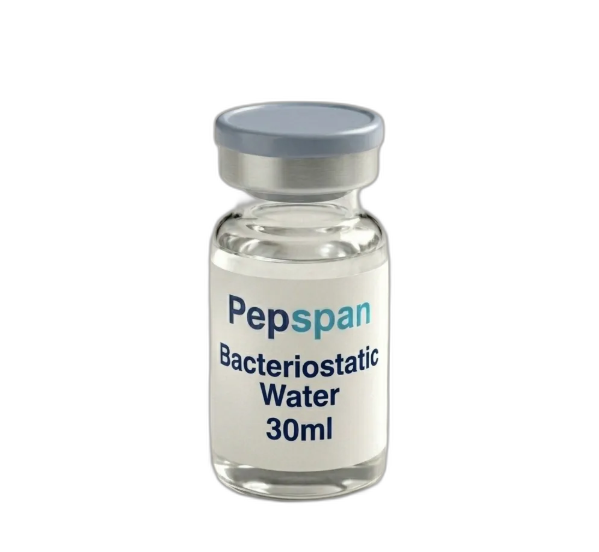
The Wolverine Blend 20mg co-lyophilized vial (BPC-157 10mg + TB-500 10mg) is supplied lyophilised; in the laboratory it is reconstituted with bacteriostatic water (0.9% benzyl alcohol) under aseptic conditions — swirl gently, do not shake, since vigorous agitation can fragment the larger TB-500 peptide chain (~4963 g/mol).
- Expected appearance: Clear, colorless solution with no particulates.
- Post-reconstitution stability: Store at 2-8°C protected from light. Use within 30 days; discard if solution becomes cloudy or develops particulates.
Stability & Half-Life Data
- BPC-157 plasma half-life: Approximately 30 minutes following subcutaneous administration in rodent pharmacokinetic studies. Tissue effects (angiogenesis, VEGF-receptor signaling, growth factor cross-talk) persist much longer than the plasma window.
- TB-500 plasma half-life: Approximately 2-3 hours due to its larger molecular size (~4963 g/mol) and slower clearance. Actin-binding effects extend the functional window further at the cellular level.
- Lyophilized stability: Up to 24 months when stored at -20°C in a sealed vial protected from light and moisture. Up to 4 weeks at 2-8°C without measurable purity loss.
- Reconstituted stability: 30 days at 2-8°C in low-protein-binding polypropylene containers, protected from light. TB-500 is the rate-limiting component due to its larger size.
- Thermal stability: Lyophilized form is stable up to 40°C for short transport excursions. Avoid sustained temperatures above 25°C.
- Freeze-thaw: Avoid repeated freeze-thaw cycles of reconstituted solution. Aliquot into single-use volumes before freezing if long-term storage is required.
- Kinetic complementarity: The different half-lives (BPC-157 ~30 min vs TB-500 ~2-3 h) produce a layered tissue-repair signal: BPC-157 initiates early VEGF and angiogenic priming, while TB-500 sustains the cellular migration window for hours afterward.
Composition
- Blend Components: BPC-157 (10mg) + TB-500 (10mg)
- Total Peptide Content: 20mg per vial
- BPC-157 Molecular Formula: C62H98N16O22
- BPC-157 Molecular Weight: 1419.53 g/mol
- TB-500 Molecular Formula: C212H350N56O78S
- TB-500 Molecular Weight: 4963.44 g/mol
- Purity: >98% each component (HPLC)
- Appearance: White lyophilized powder
Storage
- Store lyophilized blend at -20C for long-term storage (up to 24 months).
- For short-term storage (up to 4 weeks), refrigerate at 2-8C.
- After reconstitution, store at 2-8C and use within 30 days.
- Avoid repeated freeze-thaw cycles.
- Protect from light and moisture at all times.
Certificate of Analysis
The Wolverine Blend is a co-lyophilised 20 mg vial filled from two lots analysed individually by Janoshik Analytical (Prague, Czech Republic): BPC-157, lot PEP-BPC157-2607-01, HPLC purity 99.7%; and TB-500, lot PEP-TB500-2608-01, HPLC purity 98.45%, 4.77 mg per vial, analysed on 9 September 2026. Both reports are linked from the lot page /l/WOLV2608. Reports are lot-specific, not generic.
Batch Purity Report
Janoshik VerifiedCurrent batch PEP-WOLV-2608-01: components analysed individually · BPC-157 and TB-500 reports published
Every batch of Wolverine Blend sold by Pepspan is independently tested by Janoshik Analytical (Prague, Czech Republic). HPLC purity and the actual content per vial are measured for each shipment. Reports are batch-specific — not generic.
View All Purity Reports →Research Disclaimer
This product is intended for laboratory research use only. It is not a drug, food, cosmetic, or dietary supplement. The Wolverine Blend is not approved for human or veterinary use by any regulatory agency. It must not be administered to humans or animals outside of approved clinical trials. By purchasing this product, you confirm that you are a qualified researcher and that this product will be used exclusively for legitimate scientific research purposes. Pepspan assumes no liability for any misuse of this product. All handling must comply with local regulations and institutional safety protocols.
Frequently Asked Questions
What is the Wolverine Blend?
The Wolverine Blend is a co-lyophilized 2-peptide research stack combining BPC-157 (10mg) + TB-500 (10mg) in a single vial. It is the most extensively used dual-peptide combination in tissue repair and recovery research, leveraging BPC-157's angiogenic and VEGF-receptor mechanisms with TB-500's actin sequestration and cell migration effects. The blend is used in tendon, ligament, and musculoskeletal injury models.
How is the Wolverine Blend reconstituted?
The 20mg blend vial is supplied lyophilised; in the laboratory it is reconstituted with bacteriostatic water under aseptic conditions — swirl gently, do not shake, since vigorous agitation can fragment the longer TB-500 chain. The solution should be clear and colorless.
What concentrations are cited in the research literature?
In rodent recovery studies, this blend of BPC-157 and TB-500 has been investigated for tissue repair, angiogenesis, and cell-migration endpoints, where the two peptides' complementary mechanisms and kinetic profiles are studied together. Researchers should consult primary literature on BPC-157 and TB-500 individually for study-specific protocols and concentrations.
How should the Wolverine Blend be stored?
Store lyophilized blend at -20°C for up to 24 months. Short-term refrigeration at 2-8°C is acceptable for up to 4 weeks. After reconstitution, refrigerate at 2-8°C and use within 30 days. Aliquot into single-use volumes before freezing if long-term storage is required. Avoid repeated freeze-thaw cycles.
Is the Wolverine Blend legal in the EU?
Pepspan supplies the Wolverine Blend exclusively as a reference material for laboratory research, not for human or veterinary use, and it is not an authorised medicine. Rules on buying and handling research compounds differ between countries and can change: check the rules that apply to you before ordering. Pepspan ships to all 27 EU countries from Spain.
What are the half-lives of BPC-157 and TB-500?
BPC-157 plasma half-life is approximately 30 minutes following subcutaneous administration, though its tissue effects (angiogenesis, VEGF-receptor upregulation) persist much longer. TB-500 has a longer plasma half-life of approximately 2-3 hours due to its larger molecular size (~4963 g/mol) and slower clearance. This complementary kinetic profile is one reason the two peptides are commonly co-administered in tissue repair research.
Is a Certificate of Analysis available?
The Wolverine Blend is a co-lyophilised 20 mg vial filled from two lots analysed individually by Janoshik Analytical (Prague, Czech Republic): BPC-157, lot PEP-BPC157-2607-01, HPLC purity 99.7%; and TB-500, lot PEP-TB500-2608-01, HPLC purity 98.45%, 4.77 mg per vial, analysed on 9 September 2026. Both reports are linked from the lot page /l/WOLV2608. Reports are lot-specific, not generic.
What's the difference vs KLOW Blend?
The Wolverine Blend is the focused 2-peptide combination (BPC-157 + TB-500) targeting direct tissue repair via angiogenesis and cell migration. The KLOW Blend extends this with two additional peptides — GHK-Cu (matrix remodeling, gene expression) and KPV (NF-kB inhibition, antimicrobial) — for multi-pathway recovery research. Wolverine is the cleaner research tool for isolating angiogenesis-plus-migration mechanisms; KLOW is the broader stack for studying coordinated repair, matrix remodeling, and anti-inflammatory pathways together.
Where can I buy the Wolverine stack peptide online in Europe?
The Wolverine stack (BPC-157 10 mg + TB-500 10 mg in one lyophilized vial) is for sale online at Pepspan for €114.90, shipped from our stock in Spain. Both components were tested individually by Janoshik Analytical (Prague): BPC-157 99.7% and TB-500 98.45% HPLC purity; details on /l/WOLV2608. Orders leave Spain within 24–48 h with tracking; delivery in the EU usually takes 2–5 business days. Free EU shipping on orders over €50; GB, CH, NO, IS and LI ship at a flat €19.90; UK orders usually arrive 2–3 business days after dispatch (UPS, tracked). Pay by PayPal, bank transfer or crypto. Research use only.
Further Research Resources
Additional research articles, comparison guides, and laboratory protocols related to this peptide:
Related Products