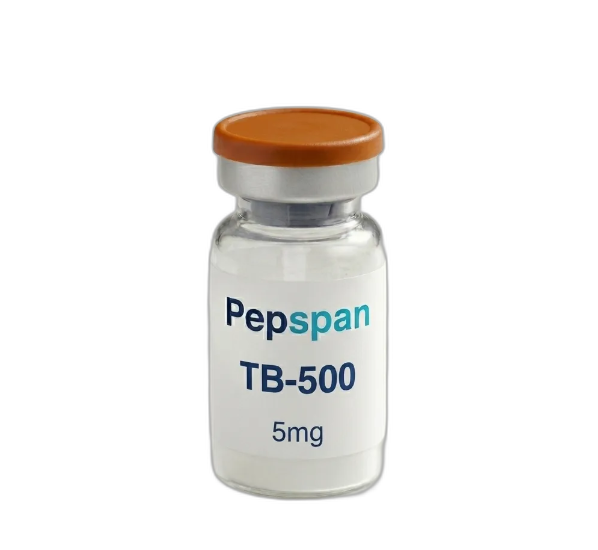
TB-500 Peptide 5mg
5mg per vial — Lyophilized Powder
Description
TB-500 at a glance. TB-500 5 mg, a lyophilised powder for laboratory research use, costs €49.90 at Pepspan. The current lot, PEP-TB500-2608-01, was tested by Janoshik Analytical at 98.5% HPLC purity — verify the report. Ships from Europe with EU delivery in 2–5 days; free shipping on orders over €50. Pay by card, PayPal or crypto (−15%).
TB-500 is a synthetic peptide corresponding to the active region of Thymosin Beta-4, a naturally occurring 43-amino-acid protein that plays a fundamental role in cellular processes related to tissue protection and repair. Thymosin Beta-4 is one of the most abundant intracellular proteins and is found in nearly all cell types, with particularly high concentrations in blood platelets and wound fluid. TB-500 represents the bioactive fragment of this protein, specifically the region responsible for actin binding and cell motility regulation.
The primary mechanism through which TB-500 exerts its effects in research models involves its interaction with globular actin (G-actin). By sequestering G-actin monomers, TB-500 modulates actin polymerization, which directly influences cell migration, proliferation, and differentiation. This actin-regulatory function is central to wound healing processes, as migrating cells require dynamic cytoskeletal reorganization to reach injury sites. In vitro studies have demonstrated that TB-500 promotes keratinocyte and endothelial cell migration in a dose-dependent manner, providing mechanistic support for its observed effects in whole-organism models.
Preclinical wound healing research has produced substantial data on TB-500's activity. In dermal wound models, researchers have documented accelerated wound closure, increased collagen deposition, and enhanced angiogenesis at the wound site. Cardiac tissue studies have been particularly noteworthy: research in murine models of myocardial infarction has shown that TB-500 treatment is associated with improved cardiac function, reduced scar formation, and activation of cardiac progenitor cells. These findings have generated significant interest in TB-500 as a research tool for studying cardiac regeneration.
Anti-inflammatory properties of TB-500 have been documented across multiple experimental paradigms. The peptide has been shown to downregulate inflammatory cytokines, including interleukin-1 beta and tumor necrosis factor alpha, in tissue culture models. In joint inflammation studies, TB-500 treatment was associated with reduced inflammatory cell infiltration and preservation of cartilage structure. Researchers studying musculoskeletal injuries have used TB-500 to investigate tendon and ligament repair, reporting improved tensile strength and fiber alignment in treated specimens.
TB-500 is supplied as a white lyophilized powder with purity exceeding 98% as confirmed by HPLC. Each vial contains 5mg of peptide and should be reconstituted with bacteriostatic water before use. The high molecular weight of the complete peptide sequence ensures biological activity consistent with published research protocols.
EU Shipping: Ships from Spain to all 27 EU countries. Free shipping on orders over €50. No customs delays — intra-EU shipment. Tracked courier.
Reconstitution & Storage
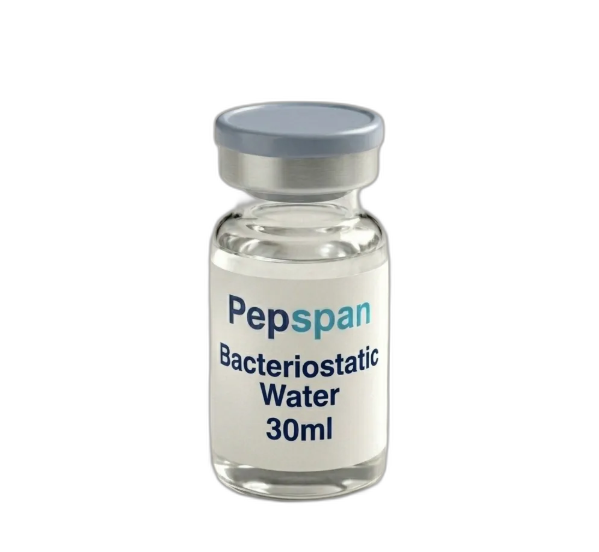
TB-500 5mg is supplied as a lyophilized powder; in the laboratory it is reconstituted with bacteriostatic water (0.9% benzyl alcohol preservative) under aseptic conditions — swirl gently, do not shake, as TB-500 is a relatively large peptide (~5 kDa) and aggressive agitation can promote aggregation.
- Expected appearance: Clear, colorless, particulate-free solution. If undissolved material persists, allow the vial to sit at room temperature for a few minutes and swirl again.
- Post-reconstitution stability: Store at 2-8°C protected from light. Use within 30 days. Avoid repeated freeze-thaw of the working solution.
Stability & Half-Life Data
- Plasma half-life: Approximately 2-3 hours after parenteral administration in rodent pharmacokinetic studies. The relatively long plasma half-life (compared to BPC-157's ~30 minutes) reflects the larger molecular size and slower renal clearance.
- Biological activity duration: Tissue effects persist substantially longer than plasma half-life, with documented activity 5-7 days post-administration in dermal wound models — consistent with TB-500 acting as a regulatory signaling molecule with downstream cascade effects.
- Lyophilized stability: Up to 24 months at -20°C in a sealed vial protected from light and moisture. Up to 4 weeks at 2-8°C without measurable purity loss.
- Reconstituted stability: 30 days at 2-8°C when reconstituted with bacteriostatic water. Beyond 30 days, gradual peptide degradation and potential aggregation may occur.
- Aggregation sensitivity: TB-500 is more sensitive to mechanical stress than smaller peptides. Avoid vortexing or shaking the reconstituted solution. Gentle inversion is sufficient for mixing.
- Freeze-thaw: Avoid repeated freeze-thaw cycles. Aliquot into single-use volumes if extended storage is required. Each freeze-thaw cycle can promote aggregation of the higher-MW peptide.
- Light sensitivity: Moderate. Store reconstituted solution in amber vials or wrapped in foil. Avoid sustained direct UV or strong visible light.
Composition
- Peptide: TB-500 (Thymosin Beta-4 Fragment)
- Molecular Formula: C212H350N56O78S
- Molecular Weight: 4963.44 g/mol
- Purity: >98% (HPLC)
- Appearance: White lyophilized powder
- Quantity: 5mg per vial
Storage
- Store lyophilized peptide at -20C for long-term storage (up to 24 months).
- For short-term storage (up to 4 weeks), refrigerate at 2-8C.
- After reconstitution, store at 2-8C and use within 30 days.
- Avoid repeated freeze-thaw cycles.
- Protect from light and moisture at all times.
Certificate of Analysis
Yes. Each lot of TB-500 is analysed independently by Janoshik Analytical (Prague, Czech Republic). The current lot PEP-TB500-2608-01 was analysed on 9 September 2026: TB-500 (TB-4) 4.77 mg per vial, HPLC purity 98.45%. The report is published on this page and on /l/TB5002608, and can be verified directly at Janoshik with key R9V26N4MRVFC. Reports are lot-specific, not generic.
Batch Purity Report
Janoshik VerifiedCurrent batch PEP-TB500-2608-01: analysed 2026-09 · report published
Every batch of TB-500 sold by Pepspan is independently tested by Janoshik Analytical (Prague, Czech Republic). HPLC purity and the actual content per vial are measured for each shipment. Reports are batch-specific — not generic.
View All Purity Reports →Research Disclaimer
This product is intended for laboratory research use only. It is not a drug, food, cosmetic, or dietary supplement. TB-500 is not approved for human or veterinary use by any regulatory agency. It must not be administered to humans or animals outside of approved clinical trials. By purchasing this product, you confirm that you are a qualified researcher and that this product will be used exclusively for legitimate scientific research purposes. Pepspan assumes no liability for any misuse of this product. All handling must comply with local regulations and institutional safety protocols.
Frequently Asked Questions
What is TB-500?
TB-500 is a synthetic peptide corresponding to the active region of Thymosin Beta-4 (Tβ4), a naturally occurring 43-amino-acid protein abundantly expressed in nearly all cell types. The synthetic fragment is widely studied in preclinical models for tissue repair, cardiac regeneration, wound healing, and actin cytoskeleton dynamics.
How is TB-500 reconstituted?
TB-500 5mg is supplied lyophilised; in the laboratory it is reconstituted with bacteriostatic water under aseptic conditions — swirl gently, do not shake. The solution should be clear and colorless.
What concentrations are cited in the research literature for TB-500?
Published rodent studies have used TB-500 across a range of concentrations depending on the experimental endpoint. In vitro studies use concentrations from 1 ng/ml to 1 μg/ml depending on the cellular endpoint. Researchers should consult primary literature (Goldstein, Hannappel, Kleinman 2005-2018) for the concentrations reported in each study.
How long does TB-500 last after reconstitution?
Reconstituted TB-500 stored at 2-8°C is stable for up to 30 days. The peptide has a relatively large molecular weight (~5,000 Da) compared to smaller research peptides, but standard refrigerated storage is sufficient when prepared aseptically with bacteriostatic water. Protect from light. Avoid freeze-thaw cycles.
Can I buy TB-500 in Europe?
Yes. Pepspan ships TB-500 5mg lyophilized vials across all 27 EU countries from Spain. Each batch is independently tested by Janoshik Analytical (Prague) for HPLC purity and content per vial. COA included. Research Use Only. Orders ship from Europe — no customs delays, intra-EU shipment.
Do I need a prescription for TB-500?
Pepspan does not sell medicines and does not dispense against prescriptions. TB-500 is supplied exclusively as a reference material for laboratory research, not for human or veterinary use. Check the regulations in your country before ordering.
How does TB-500 compare to BPC-157?
TB-500 (~5,000 Da, Thymosin Beta-4 fragment) acts primarily via actin sequestration and is heavily studied for cardiac regeneration, dermal wound healing, and cell motility. BPC-157 (1,419 Da, gastric pentadecapeptide) acts via nitric oxide modulation, prostaglandins, and growth factor signaling, with more focus on tendon/ligament and GI tissue. The Wolverine Blend combines both peptides for synergistic research.
Is TB-500 tested by Janoshik?
Yes. Each lot of TB-500 is analysed independently by Janoshik Analytical (Prague, Czech Republic). The current lot PEP-TB500-2608-01 was analysed on 9 September 2026: TB-500 (TB-4) 4.77 mg per vial, HPLC purity 98.45%. The report is published on this page and on /l/TB5002608, and can be verified directly at Janoshik with key R9V26N4MRVFC. Reports are lot-specific, not generic.
Where can I buy TB-500 online in Europe?
TB-500 5mg is for sale online at Pepspan for €49.90 per vial, shipped from our stock in Spain. The current lot PEP-TB500-2608-01 was tested by Janoshik Analytical (Prague): 98.45% HPLC purity and 4.77 mg per vial; the certificate is on /l/TB5002608. Orders leave Spain within 24–48 h with tracking; delivery in the EU usually takes 2–5 business days. Free EU shipping on orders over €50; GB, CH, NO, IS and LI ship at a flat €19.90; UK orders usually arrive 2–3 business days after dispatch (UPS, tracked). Pay by PayPal, bank transfer or crypto. Research use only.
Further Research Resources
Additional research articles, comparison guides, and laboratory protocols related to this peptide:
Related Products
 BEST VALUE