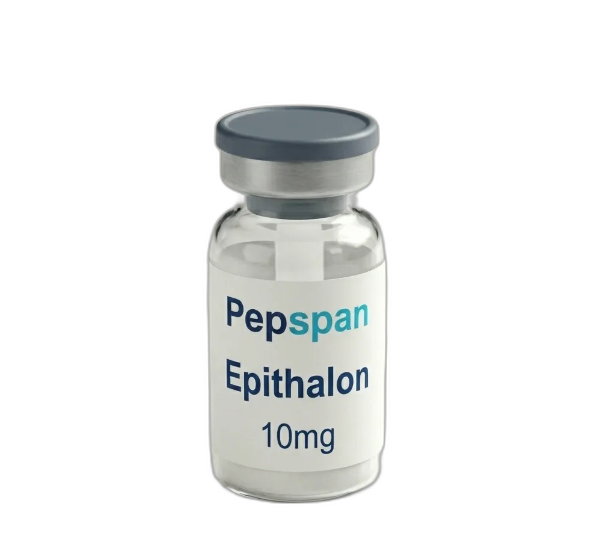
Epithalon (Epitalon) Peptide 10mg
10mg per vial — Lyophilized Powder
Description
Epithalon at a glance. Epithalon 10 mg, a lyophilised powder for laboratory research use, costs €54.90 at Pepspan. Independent analysis of the current lot, PEP-EPIT-2608-01, by Janoshik Analytical is scheduled; the report will be published on the lot page. Ships from Europe with EU delivery in 2–5 days; free shipping on orders over €50. Pay by card, PayPal or crypto (−15%).
Epithalon (also spelled Epitalon or Epithalone) is a synthetic tetrapeptide with the sequence Ala-Glu-Asp-Gly, originally developed by Professor Vladimir Khavinson at the St. Petersburg Institute of Bioregulation and Gerontology. The peptide is a synthetic analog of Epithalamin, a polypeptide extract of the pineal gland that was the subject of extensive research in the Soviet and Russian biogerontology programs spanning several decades. Epithalon represents the minimal bioactive sequence identified from this pineal extract, making it a precisely defined research tool for studying the molecular mechanisms underlying cellular aging.
The central mechanism investigated in Epithalon research is its effect on telomerase activity. Telomerase is the ribonucleoprotein enzyme responsible for maintaining telomere length at the ends of chromosomes, and its progressive decline is a hallmark of cellular senescence. In cell culture experiments, Epithalon treatment has been shown to increase telomerase activity in human somatic cells, including peripheral blood T lymphocytes and retinal pigment epithelial cells. Published data from Khavinson's laboratory demonstrated that Epithalon-treated cell cultures exhibited telomere elongation and extended replicative lifespan compared to untreated controls, with some studies reporting up to 44% increase in the number of cell doublings.
Research into Epithalon's relationship with the pineal gland has produced intriguing findings. The pineal gland produces melatonin, a hormone that declines with age and serves as a key regulator of circadian rhythms, antioxidant defense, and immune function. In aged research models, Epithalon administration has been associated with restored nighttime melatonin peaks, improved circadian rhythm amplitude, and normalization of cortisol secretion patterns. These neuroendocrine effects suggest that Epithalon may act as a pineal bioregulator, restoring glandular function that deteriorates during aging rather than simply supplementing a single hormone.
Longevity studies in animal models constitute some of the most compelling Epithalon research. In long-term studies using fruit flies (Drosophila melanogaster) and rodent models, Epithalon administration was associated with statistically significant increases in mean and maximum lifespan. In one notable study, aged female mice receiving Epithalon showed a 12.3% increase in mean lifespan compared to control groups. Researchers attributed these outcomes to the combined effects of telomere maintenance, improved antioxidant enzyme expression (including superoxide dismutase and glutathione peroxidase), and reduced incidence of spontaneous tumor development in treated groups.
Additional research areas include Epithalon's effects on gene expression patterns associated with aging. Microarray studies have identified changes in the expression of genes involved in cell cycle regulation, apoptosis, and stress response following Epithalon treatment. The peptide has also been studied in the context of retinal degeneration, where it showed protective effects on retinal pigment epithelium in models of age-related macular degeneration. Epithalon is supplied as a white lyophilized powder at 10mg per vial, exceeding 98% purity by HPLC analysis.
EU Shipping: Ships from Spain to all 27 EU countries. Free shipping on orders over €50. No customs delays — intra-EU shipment. Tracked courier.
Reconstitution & Storage
Epithalon 10mg is supplied as a lyophilized powder; in the laboratory it is reconstituted with bacteriostatic water under aseptic conditions — swirl gently, do not shake. The tetrapeptide dissolves readily.
- Expected appearance: Clear, colorless, particulate-free solution.
- Post-reconstitution stability: Store at 2-8°C protected from light. Use within 30 days.
Stability & Half-Life Data
- Plasma half-life: Very short — approximately 5-10 minutes after parenteral administration in rodent pharmacokinetic studies. The small tetrapeptide size (~390 Da) makes Epithalon subject to rapid enzymatic cleavage and renal clearance.
- Biological activity duration: Despite the short plasma half-life, downstream effects on telomerase expression and pineal regulation persist substantially longer (days to weeks) — consistent with Epithalon acting as a signaling molecule triggering longer-lived transcriptional changes rather than direct dose-response activity.
- Lyophilized stability: Up to 36 months at -20°C in a sealed vial protected from light and moisture. Up to 4 weeks at 2-8°C without measurable purity loss. The small tetrapeptide is more thermally robust than larger peptides.
- Reconstituted stability: 30 days at 2-8°C when reconstituted with bacteriostatic water. Beyond 30 days, gradual peptide degradation may occur.
- Thermal stability: The lyophilized form tolerates short transport excursions up to 40°C. The reconstituted peptide should remain refrigerated.
- Freeze-thaw: Avoid repeated freeze-thaw cycles of reconstituted solution. Aliquot before freezing if long-term storage is required.
- Light sensitivity: Moderate. Store reconstituted solution in amber vials or wrapped in foil. Avoid sustained direct UV light.
Composition
- Peptide: Epithalon (Epitalon)
- Sequence: Ala-Glu-Asp-Gly (AEDG)
- Molecular Formula: C14H22N4O9
- Molecular Weight: 390.35 g/mol
- Purity: >98% (HPLC)
- Appearance: White lyophilized powder
- Quantity: 10mg per vial
Storage
- Store lyophilized peptide at -20C for long-term storage (up to 36 months).
- For short-term storage (up to 4 weeks), refrigerate at 2-8C.
- After reconstitution, store at 2-8C and use within 30 days.
- Avoid repeated freeze-thaw cycles.
- Protect from light and moisture at all times.
Certificate of Analysis
Every batch of Epithalon sold by Pepspan undergoes rigorous third-party testing. Our Certificate of Analysis (COA) reports HPLC purity and the actual content per vial, measured by Janoshik Analytical on each lot. COA documentation is available upon request for any batch number. All testing is performed by independent European laboratories to ensure the highest standards of accuracy and reliability.
Batch Purity Report
Janoshik VerifiedCurrent batch: PEP-EPIT-2608-01 · lot page →
Every batch of Epithalon sold by Pepspan is independently tested by Janoshik Analytical (Prague, Czech Republic). HPLC purity and the actual content per vial are measured for each shipment. Reports are batch-specific — not generic.
View All Purity Reports →Research Disclaimer
This product is intended for laboratory research use only. It is not a drug, food, cosmetic, or dietary supplement. Epithalon is not approved for human or veterinary use by any regulatory agency. It must not be administered to humans or animals outside of approved clinical trials. By purchasing this product, you confirm that you are a qualified researcher and that this product will be used exclusively for legitimate scientific research purposes. Pepspan assumes no liability for any misuse of this product. All handling must comply with local regulations and institutional safety protocols.
Frequently Asked Questions
What is Epithalon?
Epithalon (also spelled Epitalon or Epithalone) is a synthetic tetrapeptide with the sequence Ala-Glu-Asp-Gly (AEDG), originally developed by Prof. Vladimir Khavinson at the St. Petersburg Institute of Bioregulation and Gerontology. It is the synthetic analog of Epithalamin, a polypeptide extract of the pineal gland, and is widely studied for telomerase activation, telomere maintenance, and longevity research.
How is Epithalon reconstituted?
Epithalon 10mg is supplied lyophilised; in the laboratory it is reconstituted with bacteriostatic water under aseptic conditions — swirl gently, do not shake. The solution should be clear and colorless.
What concentrations are cited in the research literature for Epithalon?
Published Russian biogerontology studies have used Epithalon across a wide range of concentrations in aged rodent models depending on the endpoint. In vitro telomerase assays use concentrations from 1 nM to 100 nM. Researchers should consult primary literature (Khavinson et al., 2003-2020) for the concentrations reported in each study.
How long does Epithalon last after reconstitution?
Reconstituted Epithalon stored at 2-8°C is stable for up to 30 days. The small tetrapeptide structure is relatively robust against aggregation. Protect from light. Avoid freeze-thaw cycles of the working solution.
Can I buy Epithalon in Europe?
Yes. Pepspan ships Epithalon 10mg lyophilized vials across all 27 EU countries from Spain. Each batch is independently tested by Janoshik Analytical (Prague) for HPLC purity and content per vial. COA included. Research Use Only. Orders ship from Europe — no customs delays, intra-EU shipment.
Do I need a prescription for Epithalon?
Pepspan does not sell medicines and does not dispense against prescriptions. Epithalon is supplied exclusively as a reference material for laboratory research, not for human or veterinary use. Check the regulations in your country before ordering.
How does Epithalon compare to GHK-Cu?
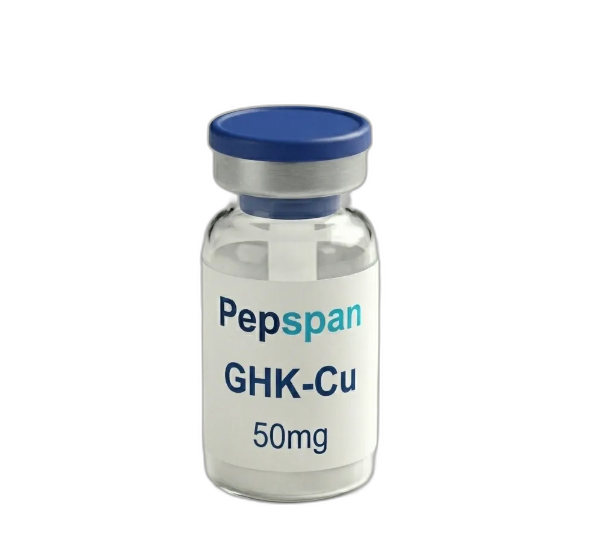
Epithalon (Ala-Glu-Asp-Gly, 390 Da) acts primarily on telomerase activity and pineal gland regulation, studied for cellular senescence and longevity research. GHK-Cu (Gly-His-Lys-Cu, 404 Da) acts via copper coordination and modulates ~4,000 genes related to tissue repair, collagen synthesis, and antioxidant defense. They target different aspects of aging biology and are sometimes used together in anti-aging research stacks.
Is Epithalon tested by Janoshik?
Yes. Every batch of Pepspan Epithalon is independently tested by Janoshik Analytical (Prague). The Certificate of Analysis covers HPLC purity and the actual content per vial. COA is batch-specific and available on request.
Where can I buy Epithalon online in Europe?
Epithalon (Epitalon) 10mg (lyophilized vial) is for sale online at Pepspan for €54.90, shipped from our stock in Spain. The independent analysis of the current lot PEP-EPIT-2608-01 is scheduled at Janoshik Analytical (Prague): the sample goes to the laboratory in October 2026, and the lot page /l/EPIT2608 will show the certificate as soon as it is issued. Orders leave Spain within 24–48 h with tracking; delivery in the EU usually takes 2–5 business days. Free EU shipping on orders over €50; GB, CH, NO, IS and LI ship at a flat €19.90; UK orders usually arrive 2–3 business days after dispatch (UPS, tracked). Pay by PayPal, bank transfer or crypto. Research use only.
Further Research Resources
Additional research articles, comparison guides, and laboratory protocols related to this peptide:
Related Products